

Weed Physiology and Molecular Biology
Understanding plant and herbicide interactions at physiological, and molecular and genomics levels
An integrated approach to weed research
The Texas A&M AgriLife Research Weed Physiology and Molecular Biology laboratory at Beaumont encompasses multiple areas related to plant and herbicide interactions at physiological, and molecular and genomics levels. The research focuses on three major areas.
Faculty

Mithila Jugulam, Ph.D.
Center Director and Professor, Weed Physiology and Molecular Biology
Three areas of research focus
The outcomes of the research of the Weed Physiology lab will help to predict the possible spread of herbicide-resistant genes in weed populations, the optimum time of herbicide application for effective weed control, and the development of future technologies for effective weed management.
Research results are expected to provide new and novel information in these focus areas:
1
Understanding of the physiological, genetic, and molecular mechanisms of weed and crop resistance to herbicides.
2
Understanding of the effects of temperature stress on herbicide efficacy.
3
Identifying sources of herbicide tolerance to develop herbicide-tolerant crops.
The Weed Physiology program also works to secure extramural funds, publishing research in peer-reviewed journals, as well as recruiting and training graduate students, and postdoctoral research associates.
Research of the Weed Physiology and Molecular Biology program at Beaumont
1. Understanding of the physiological, genetic, and molecular mechanisms of weed and crop resistance to herbicides.
Expand research details
Herbicide-resistant weeds pose significant challenges to sustainable weed management, with both short- and long-term implications. These include limited herbicide rotation options, threats to soil conservation gains due to a potential shift back to intensive tillage, and diminished effectiveness of existing weed control programs.
The evolution of herbicide resistance in weeds arises through two primary mechanisms:
- Alterations at the herbicide target site and
- Reduced herbicide availability or activity at the target site due to enhanced metabolic detoxification or decreased uptake/translocation of herbicides.
Research employing advanced physiological, molecular, and genomics approaches has unveiled fascinating and complex mechanisms underlying herbicide resistance. Notably, metabolism-based resistance to multiple herbicides within a single Palmer amaranth (Amaranthus palmeri) population was documented (Shyam et al., 2021; Nakka et al., 2017).
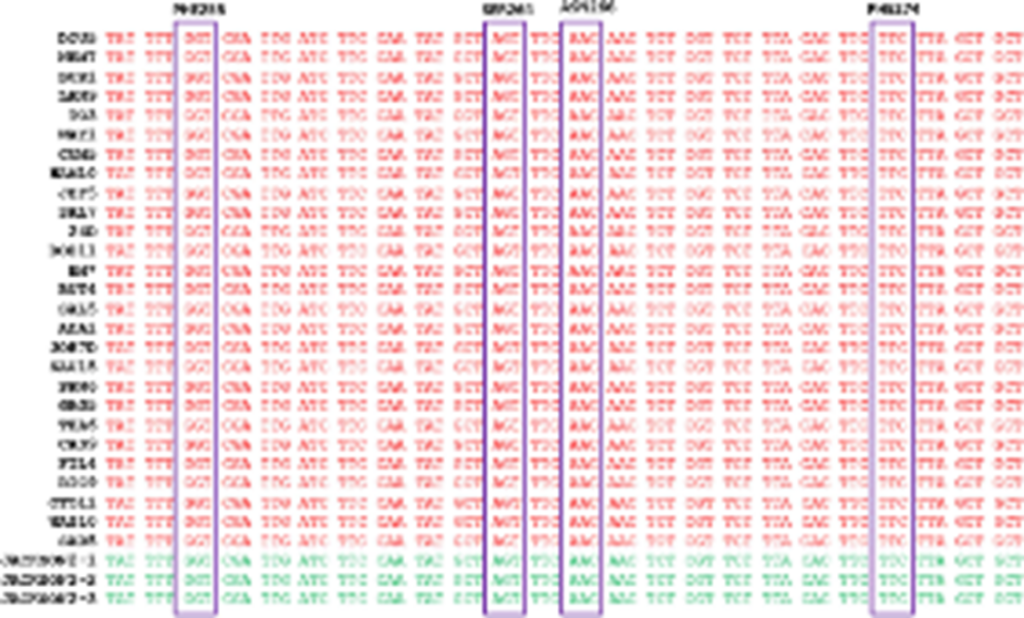
A groundbreaking discovery revealed the role of extrachromosomal circular DNA (eccDNA) in conferring glyphosate resistance, representing a novel and adaptive genomic mechanism (Koo et al., 2018). Additionally, single nucleotide polymorphisms (SNPs) associated with resistance to photosystem II (PSII) and acetolactate synthase (ALS)-inhibiting herbicides have been identified (Nakka et al., 2017; Adari et al., 2024).
Innovative RNA interference (RNAi)-based strategies for managing herbicide-resistant weed populationsRANi in weed science have also been explored, offering a promising alternative to conventional control methods (Kumam et al., 2023; Francis et al., 2024).
Understanding the molecular and genetic mechanisms underlying herbicide resistance is crucial for assessing the prevalence, frequency, and spread of resistant alleles in weed populations. This knowledge will ultimately inform the development of more effective and sustainable weed management strategies.
Physiology of herbicide resistance

Genomics of herbicide resistance
Weed molecular cytogenetics

RANi in weed science

2. Understanding of the effects of temperature stress on herbicide efficacy.
Expand research details

Temperature stress plays a critical role in influencing herbicide efficacy, ultimately impacting the success of weed management programs. Variations in temperature can affect herbicide absorption, translocation, metabolism, and overall performance, leading to inconsistent weed control outcomes.
Our research findings indicate that the efficacy of several commonly used herbicides—such as lactofen, glyphosate, dicamba, and 2,4-D—can be significantly enhanced when applied under cooler temperature conditions. This improvement in control was found in problematic weed species like kochia (Bassia scoparia), lambsquarters (Chenopodium album), Palmer amaranth, and common waterhemp (Amaranthus tuberculatus) (Shyam et al., 2019; Ou et al., 2016; Rudell et al., 2023).
In addition, our research extends to understanding the effects of temperature stress on herbicide efficacy in crop species.
This work is crucial for balancing effective weed control with maintaining crop safety and productivity. Furthermore, physiological, biochemical, and molecular mechanisms underlying the differential efficacy of herbicides under varying temperature conditions also investigated.
The outcomes of this research will provide valuable insights into optimizing herbicide application timing and conditions, ultimately improving weed control efficiency and minimizing the risk of herbicide resistance evolution. This knowledge will guide more effective, climate-resilient weed management strategies.
3. Identifying sources of herbicide tolerance to develop herbicide-tolerant crops.
Expand research details

The program’s research also focuses on the identification of sources of tolerance to herbicides in crop species including rice. Developing herbicide-tolerant crops is a crucial advancement in modern agriculture, offering multiple benefits such as more effective weed control options, the ability to use diverse herbicide modes of action, and the promotion of conservation practices like reduced or no-till farming, which helps preserve soil health and prevent erosion.
Previous studies have successfully identified and characterized herbicide tolerance in several crop species, including sorghum (Sorghum bicolor), canola (Brassica napus), and wheat (Triticum aestivum) (Pandian et al., 2021, 2022; Sudhakar et al., 2023; Dillon et al., 2016). These discoveries provide a foundation for developing commercial herbicide-tolerant cultivars and expanding integrated weed management strategies.
Our research not only focuses on identifying tolerant germplasm but also on understanding the underlying physiological, biochemical, and molecular mechanisms that confer herbicide tolerance.
Identifying novel sources of herbicide tolerance is critical for developing herbicide-tolerant crop technologies, which enable the adoption of diverse herbicide programs and reduce the risk of herbicide-resistant weed evolution.
Selected publications
Expand publications
- Islam, MM, Gill BS, Malone JM, Preston C and Jugulam M (2024) Cytogenetic characterization of EPSPS gene amplification in glyphosate‐resistant Hordeum glaucum and Bromus diandrus from Australia. The Plant Journal. https://doi.org/10.1111/tpj.17128
- Torra J, Alcántara‐de la Cruz R, de Figueiredo MR, Gaines TA, Jugulam M, Merotto Jr A, Palma‐Bautista C, Rojano‐Delgado AM, Riechers DE (20 24) Metabolism of 2, 4‐D in plants: comparative analysis of metabolic detoxification pathways in tolerant crops and resistant weeds. Pest Management Science. (https://doi.org/10.1002/ps.8373)
- Montgomery J, Morran S, MacGregor DR, McElroy JS, Neve P, Neto C, Vila-Aiub MM, Sandoval MV, Menéndez AI, Kreiner JM, Fan L, Jugulam M. et al. (2024) Current status of community resources and priorities for weed genomics research. Genome Biology. 27;25(1):139.
- *Sudhakar S, Nakka S, Mohammad A, Trick H, Prasad PVV, Jugulam M (2024) Metabolism of tembotrione, a triketone herbicide confers differential sensitivity in winter wheat (Triticum aestivum). J Ag Sci and Food Chem. https://doi.org/10.1021/acs.jafc.3c08852
- *Sudhakar S, Nakka S, Mohammad A, Trick H, Prasad PVV, Jugulam M (2024) Characterization of wheat (Triticum aestivum) response to mesotrione, a triketone herbicide. Ag Sci and Tech. https://doi.org/10.1021/acsagscitech.3c00531
- *Kumam Y, Trick HN, Sharma V, Prasad PVV, Jugulam M (2023) Establishment of First Protocol of Hypocotyl-Based Regeneration and Callus Transformation in Waterhemp (Amaranthus tuberculatus). In Vitro Cellular & Developmental Biology-Plant, pp.1-11.
- Koo DH, *Sathishraj R, *Nakka S, Ju Y, Nandula VK, Jugulam M, Friebe B, Gill BS (2023) Extrachromosomal circular DNA mediated spread of herbicide resistance in interspecific hybrids of pigweed. Plant Phys. https://doi.org/10.1093/plphys/kiad281
- Koo DH, Ju Y, *Putta K, *Sathishraj R, Burgos N, Jugulam M, Friebe B, Gill BS (2023) Extrachromosomal DNA-mediated glyphosate resistance in Italian ryegrass. Pest Manag. Sci. DOI: 10.1002/ps.7626
- *Pandian, BA, Varanasi A, Vennapusa AR, Thompson CR, Tesso T, Prasad PVV, Jugulam M (2022) Identification and characterization of mesotrione-resistant grain sorghum (Sorghum bicolor (L.) Moench): a viable option for postemergence grass weed control. J Ag and Food Chem. 71, 1035−1045.
- *Shyam C, Jhala A, Peterson DE, Jugulam M (2022) Inheritance of 2,4-dichlorophenoxyacetic acid (2,4-D) resistance in Amaranthus palmeri. Sci Rep. 12, 21822. https://doi.org/10.1038/s41598-022-25686-1 (Nature group of publications)
- *Pandian BA, Sexton-Bowser S, Prasad PVV, Jugulam M (2021) Current status of herbicide-resistant grain sorghum (Sorghum bicolor). Pest Manag. Sci. (https://doi.org/10.1002/ps.6644)
- Jugulam M (2021) Can non-Mendelian inheritance of eccDNA-mediated EPSPS gene amplification conferring glyphosate resistance provide an opportunity to reverse resistance? Weed Research. 2021;00:1– 6. https://doi-org.er.lib.k-state.edu/10.1111/wre.12473
- *Pandian BA, Sathishraj R, Prasad PVV, Jugulam M (2021) A single gene inherited trait confers metabolic resistance to chlorsulfuron in grain sorghum (Sorghum bicolor). Planta. 253:1-12.
- *Shyam C, Borgato WA, Peterson DE, Dille JA, Jugulam M (2021) Predominance of metabolic resistance in a six-way-resistant Palmer amaranth (Amaranthus palmeri) population. Front. Plant Sci. 11:614618. doi: 10.3389/fpls.2020.614618.
- Koo DH, Molin WT, Saski CA, Jiang J, *Putta K, Jugulam M, Friebe B, Gill BS (2018) Extra-chromosomal circular DNA (eccDNA) based amplification and transmission of herbicide resistance in crop weed Amaranthus palmeri. PNAS. doi.org/10.1073/pnas.1719354115.
- Koo DH, Jugulam M, *Putta K, Cuvaca IB, Peterson DE, Currie RS, Friebe B, Gill BS (2018) Gene duplication and aneuploidy trigger rapid evolution of herbicide resistance in common waterhemp. Plant Physiology. doi:10.1104/pp.17.01668.
